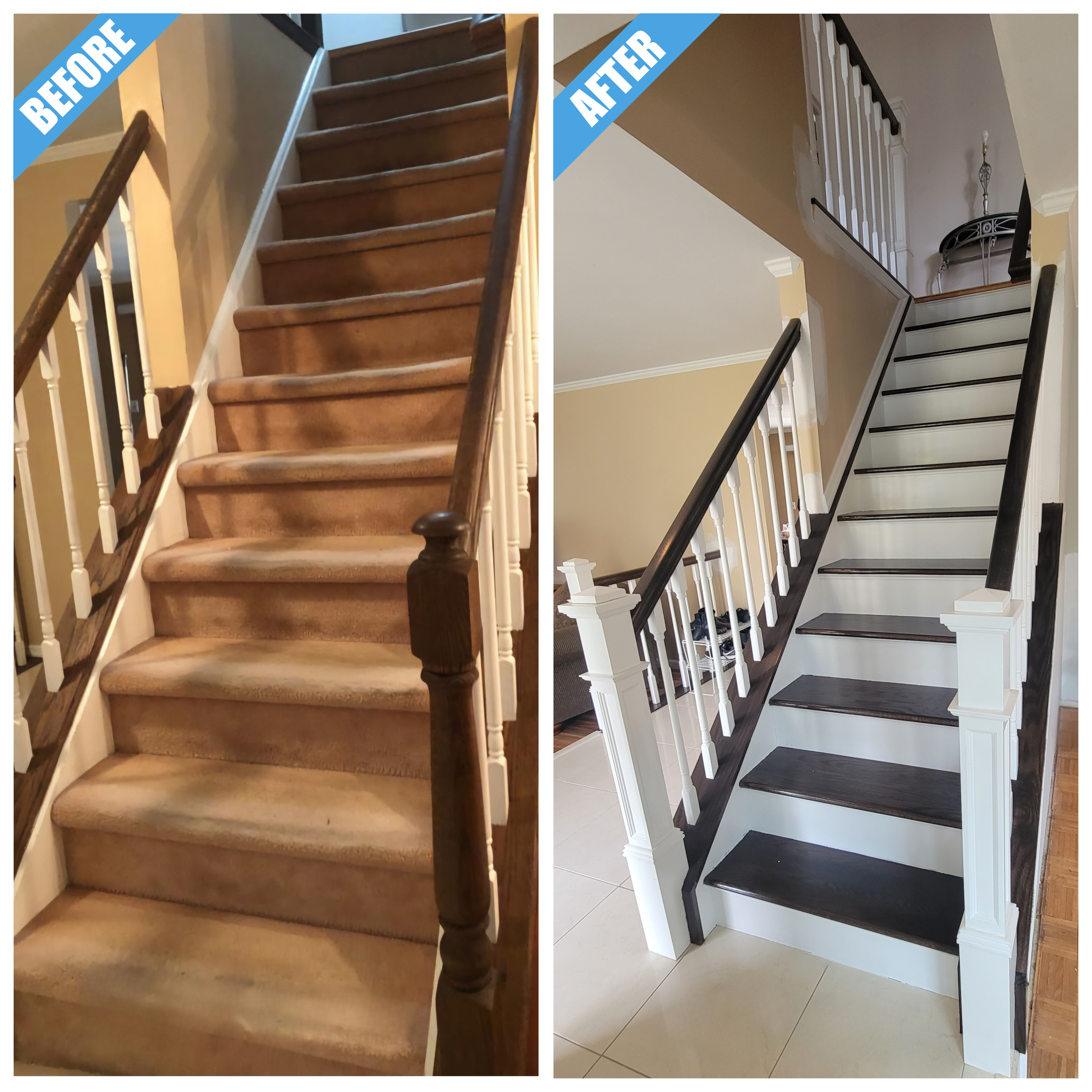
The Smithtown staircase at the top of this page had carpet on the steps and a dark wood handrail. We took the carpet off, and now it has dark treads and white risers, with white box newel posts and the dark handrail sitting over white spindles. Stairs are usually right in the middle of the house, so you notice a change like that from across the room.
All of the stairs on this page are our own jobs on Long Island. The photos are real befores and afters, and the town is where the house is.
Taking the carpet off
Smithtown was one of these. Another was a basement stair in East Meadow that was painted, with a carpet runner down the middle. That one has wood treads now, with white risers and black metal spindles.
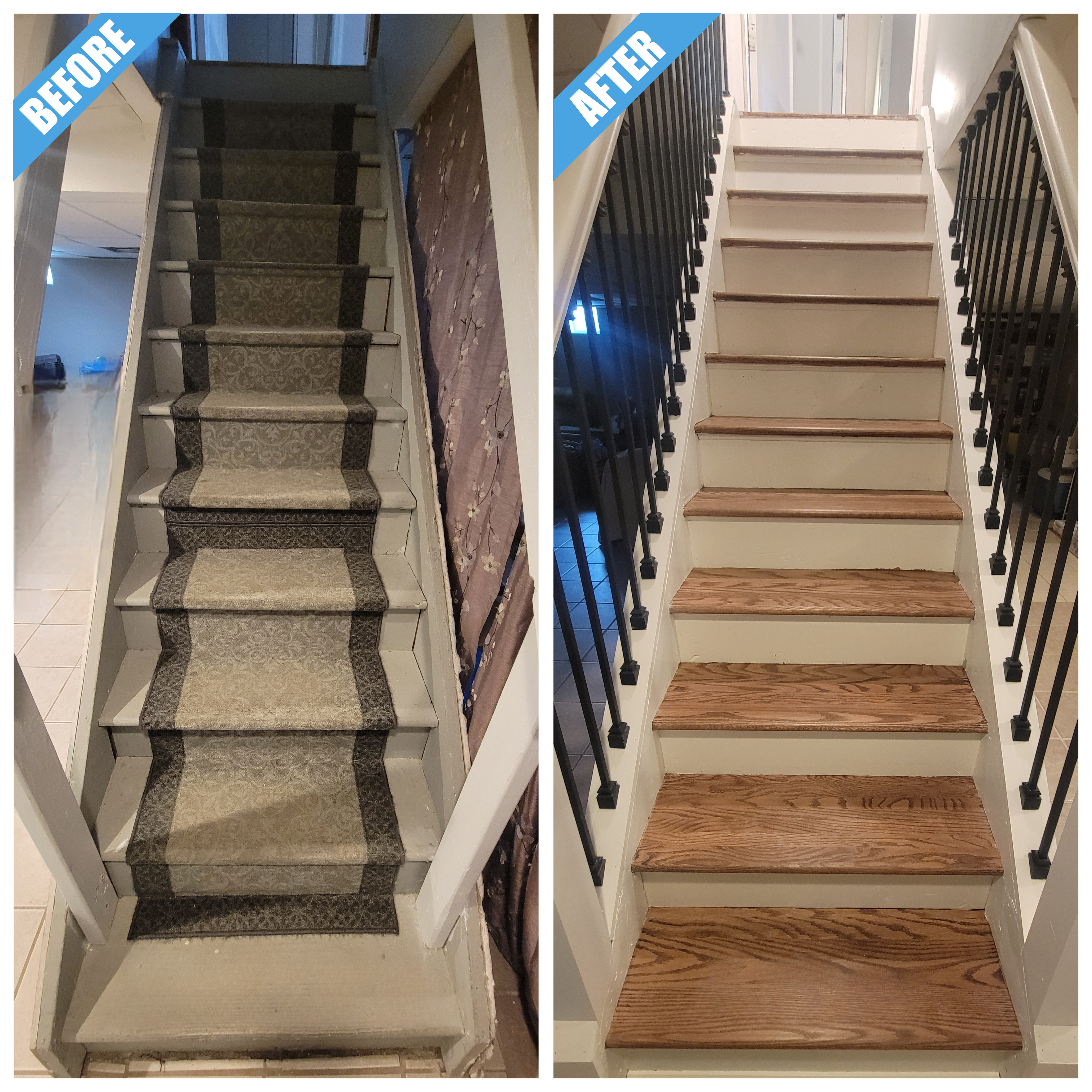
Whether the treads get replaced or the old ones get sanded and stained really depends on the budget. We do both.
Dark treads with white risers
You’ll see this combination on a lot of our jobs. The steps in a Valley Stream house were worn, and they got dark treads and white risers. In Hicksville the whole staircase was an orange-stained wood, and we redid it with darker treads and painted the risers.
New spindles and railings
Sometimes people like their steps fine and it’s only the railing they can’t stand. For that, new spindles (balusters) are enough. We don’t touch the treads, and the stairs still look different.
At the entry of a house in Seaford there was a white metal railing with a scroll pattern. We took it out and put in a white rail with plain black metal spindles.
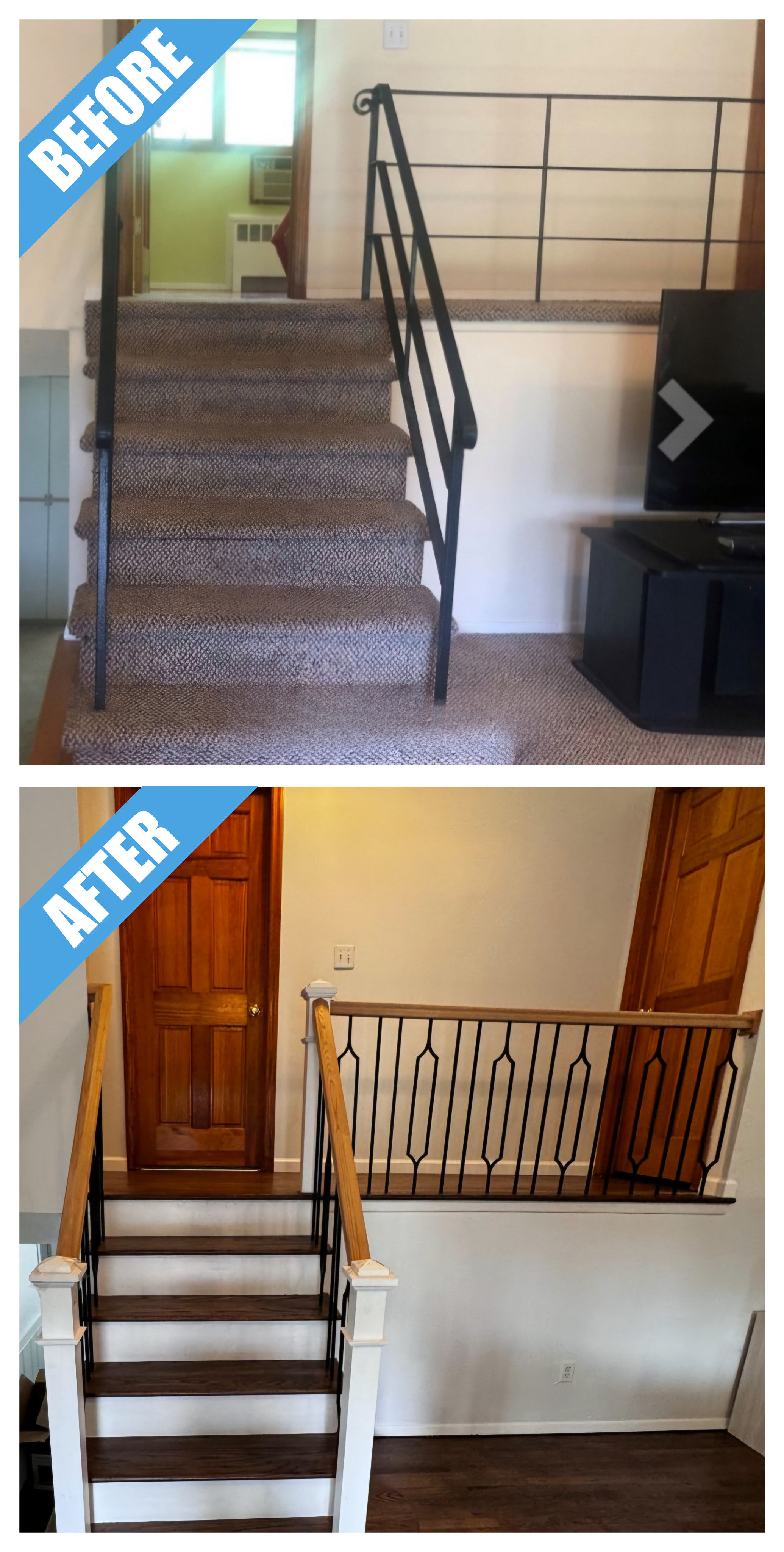
Massapequa Park was a split-level stair with a simple metal rail. Now there are white posts and a wood rail with decorative black metal balusters, and the steps have dark treads and white risers too.
The Plainview one started out as a basement stair in raw lumber, never finished. By the end it had light wood-look treads and white risers, with a white railing, turned spindles and box newel posts.
Opening up a closed stair
A few of the biggest differences in these photos came from taking a wall out.
In Hicksville there was a solid wall between the stairs and the living room, and we opened it up to a white railing with black metal spindles. In Levittown the basement stairwell was boxed in with wood paneling. It’s open now, with a railing, a wood handrail and black spindles all the way around.
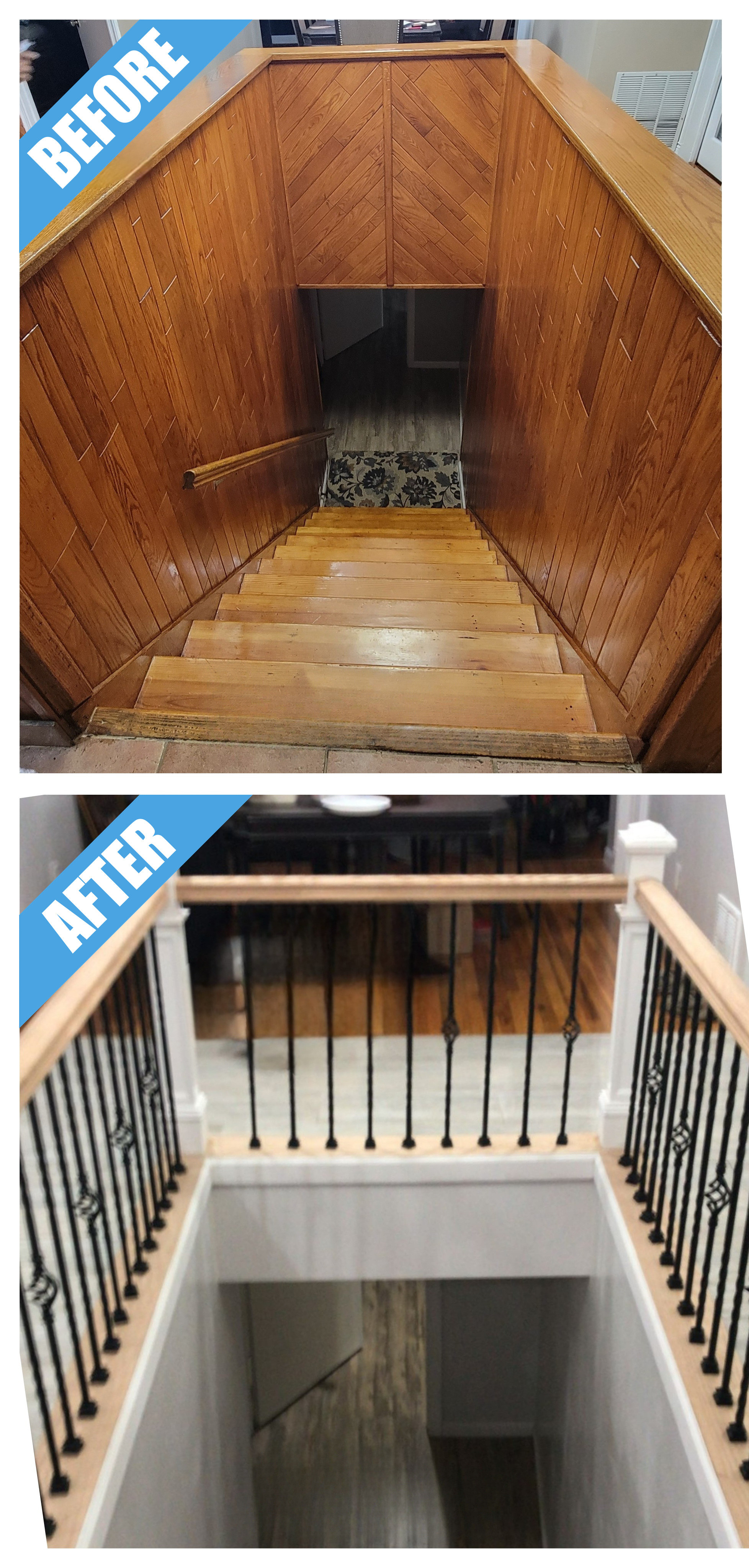
Taking out a wall is a much bigger job than swapping spindles. Before anybody starts on it, ask what they’re going to check first and whether the work needs a permit.
Tile stairs and stair walls
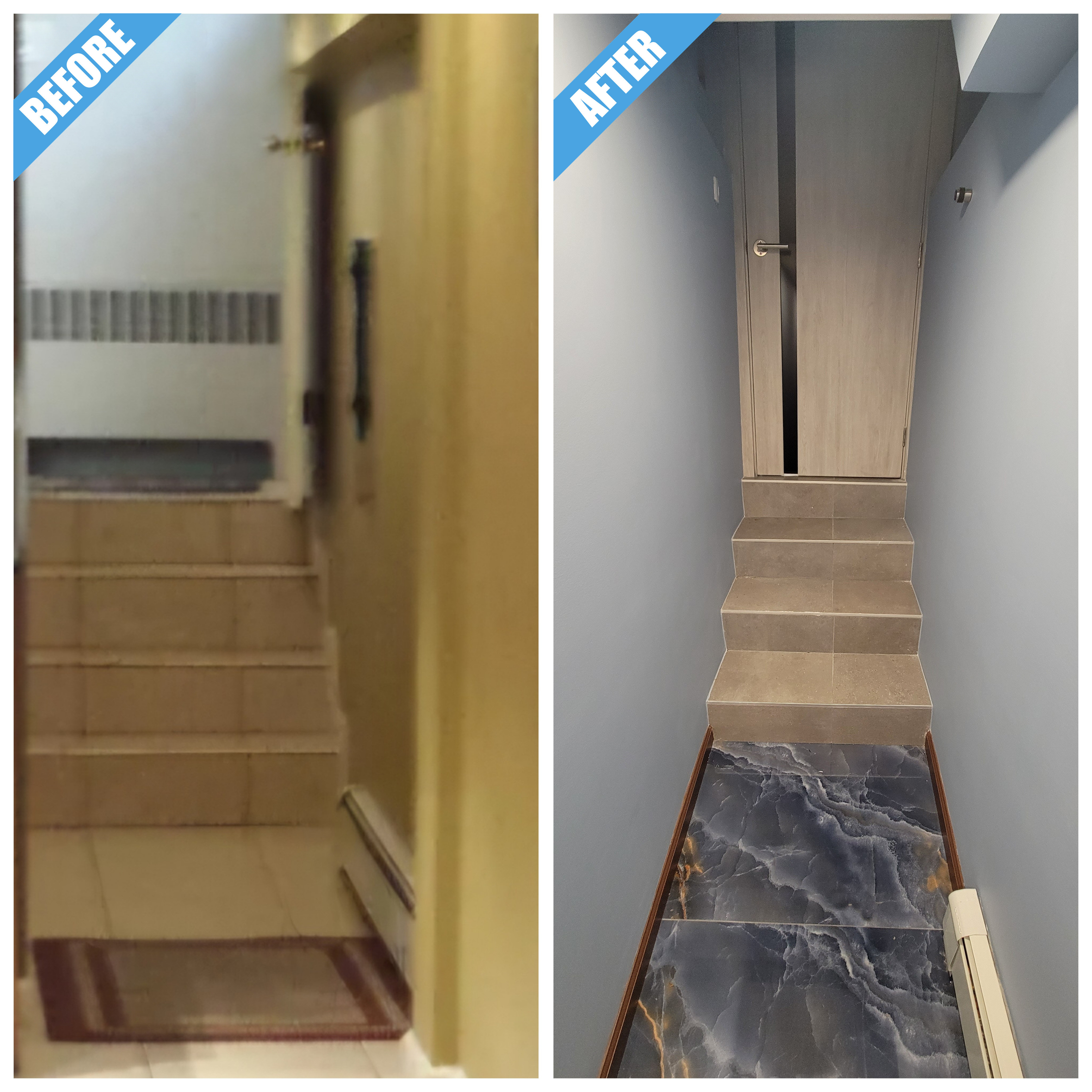
The Dix Hills staircase was beige tile, and we redid it in grey, with a marble-look tile floor at the bottom.
In Farmingdale the carpet actually stayed. What changed was the wood paneling next to the stairs. That’s a wood-slat accent wall now, with a black railing.
Seeing the materials in person
Treads, rails and stair tile never look quite the same in a photo as they do in your hand. We have stair parts on display at our showroom and warehouse, 29 Jerusalem Ave. Unit 1 in Levittown, along with the flooring, tile and mouldings, so you can see them before you choose. It’s open Monday to Saturday 9 AM to 6 PM and Sunday 11 AM to 4 PM.
More staircase photos are in our interior work gallery. If your staircase is part of a bigger job, we also do kitchens, bathrooms and basements.